

Homelessness due to domestic violence on the rise
November 15, 2018
72,000 women across Australia, sought homelessness services in 2016–17 due to family/domestic violence.
Our Staying Home Leaving Violence program gives women who want to escape domestic or family violence a choice to stay in their own homes or to leave safely.
Family and domestic violence is any behaviour that is used to gain or maintain power and control over someone else. This could be psychological, emotional, physical, and/or sexual abuse, financial, social or spiritual control, stalking or intimidation. Domestic violence occurs across all socioeconomic groups and predominantly affects women.
1 in six women have experienced physical and/or sexual violence from a cohabitating partner, since the age of 15.
CatholicCare assist women who want to stay in their own homes by working with the police for exclusion orders and to provide a safety audit of their homes. We work to make homes and families safer.
If you want to leave your home, we are able to help with safe leaving plans and information about emergency accommodation. We can also provide you with information on Apprehended Domestic Violence Orders (ADVO), court processes and family law procedures.
The Staying Home Leaving Violence program is free and is offered through our Central Coast Family Centre, along with other domestic violence support.
For more information about Staying Home Leaving Violence:
P: (02) 4356 2600 or E: ccfc@catholiccaredbb.org.au.
by Amy Robertson, Marketing Coordinator Intern


More news stories like this one

Empowering childcare educators to address domestic violence
Earlier this year, CatholicCare’s primary prevention team collaborated with council run childcare centres across the Central Coast to help combat domestic and family violence.
Read More
John’s journey from blame to accountability
When John first stepped into our Back on Track Men’s Behaviour Change Program, he didn’t come willingly and was a long way from accepting the impact of his violent behaviour.
Read More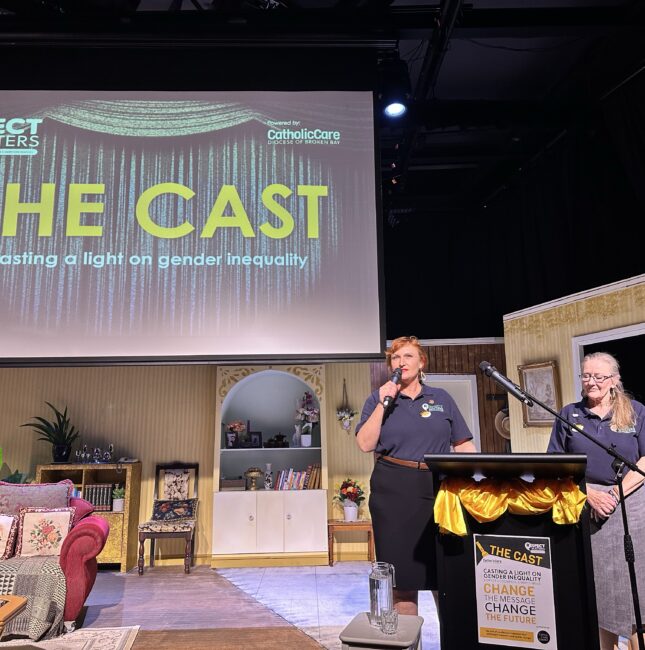
Casting a light on the drivers of domestic and family abuse
Boys don't cry. Toughen up. Be a man. CatholicCare's Respect Matters team knows there is a direct line between casual phrases like these and the domestic violence upending families across our community.
Read More