

The importance of extending Out of Home Care to age 21
July 12, 2019
The most recent survey showed that there are roughly 47,915 Australian children currently living in Out of Home Care (OOHC). Of these 47,915 children, hundreds will age out of the program this year alone. Many of these children will end up with very few resources or life skills to support themselves and make it in the world on their own. Knowing this, several States and Territories have proposed extending the OOHC program beyond 18. Currently, Tasmania and South Australia proposed extending the program to 21 years of age. Victoria is currently running a program that will extend the age to 23, and Western Australia started a program to extend support just last month. Reports were established to see what each State and Territory thought of extending care, and they are:
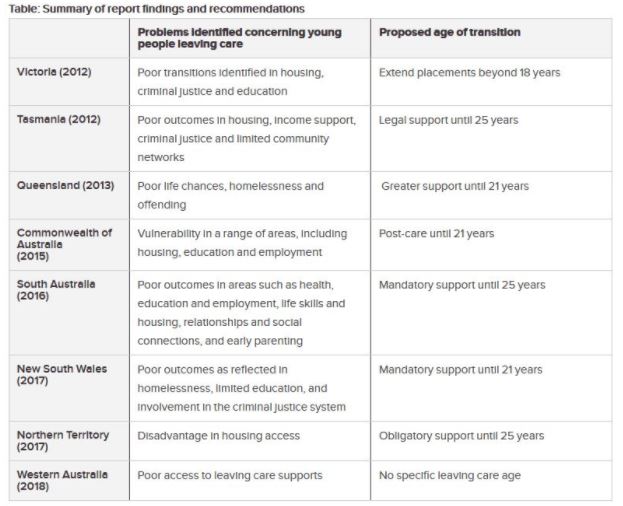
Source: Australian Institute of Family Studies
As these findings clearly show, Australian States and Territories know that there are problems with the current age limit of 18 years old. They’re taking steps to fix it and enrich the lives of the over 47,000 Australian children in OOHC today.
Consequences of not extending Out of Home Care
There are real consequences of not getting adequate support when a child ages out of the OOHC program. The biggest consequences of keeping the system like it is now and not extending it include:
- Homelessness – One survey showed that roughly 63% of the homeless youth in Australia aged out of the OOHC program and had nowhere else to go. Their foster families stopped receiving support from the government when they turned 18. The kids also lost the support of their caseworkers when they turned 18.
- Unemployment – The amount of young people unemployed in Australia continues to rise year after year. The unemployment rate for Australian youth aged 15 to 24 years old is at 12.9%. This figure works out to around 266,000 people. Also, it is widely predicted that most children who age out of the program will be unemployed within a single year.
- Lack of education – Ageing out of the program can cause rippling effects through a child’s life. It can put obstacles in the way that prevent them from furthering their education. Studies showed that youth in OOHC scored 16 to 20 points lower on tests than their peers. Less than 60% will graduate from secondary school.
- Problems with general wellbeing – A study involving 122 children in OOHC showed that they had higher rates of developmental, emotional and physical problems compared to the general population. Almost 24% reported incomplete immunisations and 54% reported behavioural or emotional health issues.
- Involvement with the justice system – When children age out of home care and lose their support system, it heightens their risks for criminal behaviour. A study of youth ordered to perform community service found that 36% of females and 21% of males had previously been in OOHC before ageing out.
- Social connections lacking – Forming strong connections with caring adults is paramount to avoiding negative outcomes. These connections provide support as the child transitions to adulthood. Children in OOHC often use a support network of adults in the child welfare system for this support. When they age out of the system, they lose out on this valuable network.
CatholicCare can help!
At CatholicCare, we’re dedicated to Australia’s youth by providing comprehensive support through the developmental years. If you’d like to know more about our Out of Home Care services, please contact us.


More news stories like this one

Empowering childcare educators to address domestic violence
Earlier this year, CatholicCare’s primary prevention team collaborated with council run childcare centres across the Central Coast to help combat domestic and family violence.
Read More
John’s journey from blame to accountability
When John first stepped into our Back on Track Men’s Behaviour Change Program, he didn’t come willingly and was a long way from accepting the impact of his violent behaviour.
Read More
Casting a light on the drivers of domestic and family abuse
Boys don't cry. Toughen up. Be a man. CatholicCare's Respect Matters team knows there is a direct line between casual phrases like these and the domestic violence upending families across our community.
Read More