

Disability Accomodation SDA banner

Take steps towards your independent living goals

Living independently can mean greater confidence, wellbeing, and stronger connections to your community – all while knowing the right support is there when you need it. We provide support across a range of accommodation settings, helping people build everyday life skills, manage personal care, and access their community. We also assist with support plans, making sure each person has the services they need to thrive.

We know that everyone has unique experiences, challenges and goals. That’s why we don’t do “one-size-fits-all.” We listen, we adapt, and we tailor support, so life feels fulfilling, comfortable, and truly your own. We also understand that life isn’t always easy. There are tough days and moments that feel overwhelming. But you are never alone. When things get harder, we walk beside you, offering care, encouragement, and support to build resilience and confidence for whatever comes next.

We partner with leading Specialist Disability Accommodation (SDA) developers and housing providers. SDA is the physical home – the bricks and mortar – designed for people who require higher levels of support. We also offer SIL only properties where no SDA funding is required.

NOTE: APPLICANTS MUST HAVE RELEVANT NDIS FUNDING (SIL AND/OR SDA).

Across seven specially designed properties across Northern Sydney, the Northern Beaches and the Central Coast, we provide SIL supports to clients with diverse support needs. Accommodation options include brand new villas and 2-bedroom houses in Terrey Hills and Thornleigh, modern apartment blocks in Manly and Point Frederick, single storey shared homes in Wahroonga and Lindfield and modern villas in Toukley.

Services provided in all of our homes:

  • Overnight, onsite supports*
  • Access to a Clinical Nurse Consultant**
  • Shared expense for utilities, internet and groceries
  • Support with medical and clinical appointments
  • Grocery shopping, meal preparation and support with mealtimes*
  • Our clients receive supports based on their individual, funded Roster of Care (ROC).

*Dependent on funding being included in each individual’s plan.

**Our Clinical Nurse Consultant offers timely clinical support and clear clinical governance, setting safe practice standards, guiding core decisions, ensuring staff are well-trained and confident, and identifying and reducing potential risks. 

Living independently isn’t just a goal. It’s freedom. It’s confidence. It’s connection. And above all, it’s a basic human right. With the right supports tailored to you, every day is your chance to really thrive. Reach out today and start living life your way. Come and see what independence can really feel like.

P: 1800 324 924
E: info@catholiccaredbb.org.au

LEARN MORE ABOUT OUR HOUSING SUPPORTS

We’re enablers, facilitators, advocates, coaches, and friends. We recognise the fundamental importance of excellent care and support. Our team is highly trained, passionate, and committed to making a real difference. If they’re not, they don’t work with us. Simple.

We don’t just tick boxes. We create homes that are safe, empowering, and built around people, not processes.

But don’t just take our word for it – here’s what some of our clients and their families have to say.


Frequently Asked Questions

Is CatholicCare a registered NDIS provider?

Yes, we are a NDIS registered provider for the following services:

  • Support with accommodation and tenancy
  • Assistance with managing life stages and transitions
  • Assistance with personal activities
  • Assistance with travel and transport
  • Support with daily tasks and shared living
  • Development of life skills
  • Support with community participation
  • Support co-ordination
  • Assistance to participate in group activities
  • Assistance to maintain mainstream employment
  • Behaviour support.

I am not Catholic, can I still access your service?

Yes, our service is open to all.

Are CatholicCare staff trained and what can they help with?

Our Supported Independent Living staff undergo regular training and have experience with the following:

  • Daily living tasks
  • Domestic duties
  • High complex health support
  • High intensity support skills
  • Positive behaviour supports and restrictive practice
  • Mental health support.

What is Supported Independent Living (SIL)?

SIL is the assistance you receive at home from support workers. The goal is to help you live as independently as possible. It can include physical supports such as helping you get in and out of bed every day, as well as any support you need to keep you safe at home. The SIL provider is the person or organisation that employs the support workers that help you.

What is Special Disability Accommodation (SDA)?

SDA refers to the physical ‘bricks and mortar’ of disability accommodation. Only people who have very high physical support or safety needs are eligible for SDA funding from the NDIS. SDA funding allows residents to pay rent to the person or organisation who owns the SDA building where they reside.

Where do I need to live to be eligible for SIL?

Eligibility for SIL funding is not dependent on where you live. You may be eligible for SIL funding whether you rent privately, own your own home, live with others, or live in a Specialist Disability Accommodation (SDA) property.

What are the three levels of SIL funding?

  1. Low needs: Regular supervision of living arrangements.
  2. Standard needs: Active assistance of most daily tasks, 24 hours a day, seven days a week.
  3. High needs: Continual and more complex active assistance to the individual.

What are the five levels of SDA?

To determine which level you are eligible for, your Support Coordinator will arrange for you to receive an OT Functional Assessment and other assessments if required to support your application. They will then help you apply to the NDIS for an assessment of your individual SDA level. The five levels are:

  1. Basic: Housing without special design features but in a location or with features that cater for the needs of people with disability and assist with the delivery of support services.
  2. Improved liveability: Housing that has been designed to improve ‘liveability’. This includes a reasonable level of physical access and some features for people with sensory, intellectual or cognitive impairment such as luminance contrasts, improved wayfinding or lines of sight for people with sensory, intellectual or cognitive impairment.
  3. Fully accessible: Housing with a high level of accessibility for people with significant physical impairment, allowing wheelchair access to the bathroom, kitchen and external areas.
  4. Robust: Housing that allows for good physical access and designed to be very resilient and safe. The design must include retreat areas for participants and staff, and the materials used must be impact resistant and reduce the need for repairs and maintenance.
  5. High physical support: Housing that has been designed to incorporate a high level of physical accessibility for people with significant physical impairment and requiring very high levels of support. New buildings must have structural provision for ceiling hoists, be assistive and communication technology ready, and have emergency power solutions and wider than usual door openings.

How can I apply for SIL and SDA funding in my NDIS plan?

Applying for SIL and SDA funding is complex, and we recommend engaging a Support Coordinator (link to our SC page). Your Support Coordinator will explore all housing options to identify the right housing to suit your individual goals and care needs. They will also help you gather all the evidence (including OT Functional Assessments and other specialist reports) to demonstrate the level of funded supports you need.

What does SIL funding cover?

SIL funding pays for all on-site care services provided to you within the home. These include transfers in and out of bed, to and from a wheelchair (if required), toileting, showering, dressing and grooming, laundry, cleaning, grocery shopping and meal preparation, meal time assistance etc.

What does SDA funding cover?

NDIS SDA funding pays the SDA provider to provide and look after the ‘bricks and mortar’ of homes where CatholicCare residents live. The SDA provider is the owner/property manager of the home. They are responsible for repairs and maintenance of the home. SDA is funded by the NDIS under ‘Capital Supports’ and is paid directly to the housing provider by the NDIS.

What expenses do residents pay from their Disability Support Pension?

Living Expenses:
Residents do contribute to living expenses. The amount will depend on the property and the SDA provider. This will be discussed in detail during the intake phase.

Rent Contribution:
25% of the participant’s Disability Support Pension + 25% of the Pension supplement + 100% of Commonwealth Rent Assistance. Rent is payable to a 3rd party or direct debit to CatholicCare Diocese of Broken Bay. This covers:

  • Reasonable repairs and maintenance (excluding repairs that can be directly attributed to damage by the resident)
  • Building insurance (where applicable by ownership of lease condition).

Latest DISABILITY HOUSING news

Spirit is the new name for our disability services

CatholicCare’s NDIS and disability services have a new name - Spirit. After years of operating under Disability Futures, we’ve embraced a fresh identity that reflects not just what we do, but who we are and the values that guide us.

Read More

Mark has greater control

It's been a year of change and growth for Mark, who is a proud resident of our Supported Independent Living house in Wahroonga. Upon being asked what he most enjoys about living at Kokoda House, Mark says, “everything!”

Read More
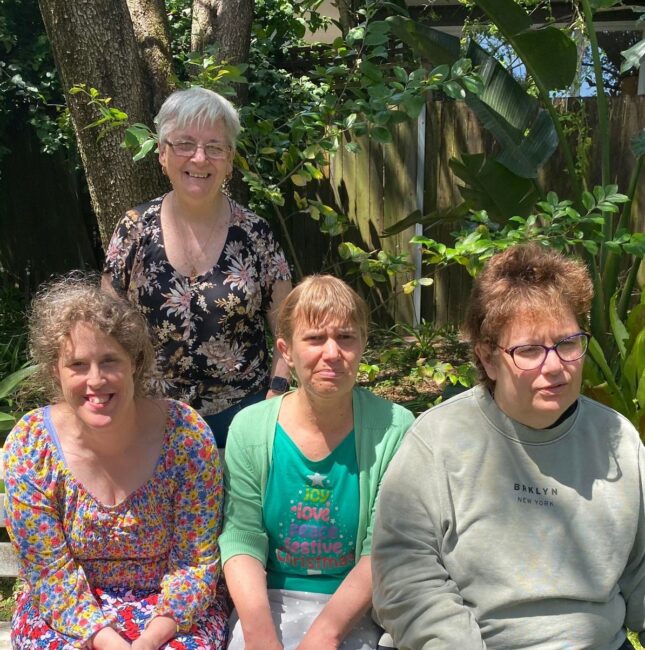
Living independently and kicking goals at Woods Cottage

When you first set foot into Woods Cottage – whoever you are – you are treated like an old friend. Part of CatholicCare’s Supported Independent Living Program, Woods Cottage provides individualised, in-home support to adults living with a disability. Alison, Susie, Jo, and Kay reside at Woods Cottage, and they couldn’t be prouder of their home.

Read More

Gaining independence and flourishing with our Supported Independent Living homes

For adults living with disability, it can be a challenge to gain independence while still receiving the support needed to flourish in life. That’s where Supported Independent Living can provide a solution.

Read More