
John’s journey from blame to accountability
October 8, 2026
When John, 32, first stepped into CatholicCare’s Back on Track Men’s Behaviour Change Program, he didn’t come willingly – and he certainly didn’t come with hope. Referred by Community Corrections and under court orders, John was a long way from accepting the impact of his violent behaviour.
John’s story is not unique. Like many men in the program, he was initially defensive, blaming others, minimising harm and justifying his actions. But thanks to the consistent work of experienced practitioners, a commitment to victim safety, and strong interagency collaboration, John’s story took a turn toward accountability and change.
John had two Apprehended Domestic Violence Orders (ADVOs) against him – one from a former partner, and one from his current. He was on bail, separated from his family, and struggling with the loss of employment and financial stress.
At home, his behaviour had created an unsafe and frightening environment. His actions ranged from physical and verbal abuse to psychological manipulation – affecting not only his partner but also his two biological children and stepchild.
One particularly serious incident – where John pushed his partner, causing her to hit her head on a coffee table – marked a crisis point that led to court proceedings and a deeper look at his pattern of coercive control and violence.
John’s first sessions in the Back on Track program were marked by resistance. He was argumentative, dismissive and unwilling to acknowledge a pattern of abuse.
“When John attended the assessments, he blamed his partner, stating, ‘If she didn’t provoke me, I wouldn’t lose it,” says Practice Manager, Cathy. “He would justify his actions by claiming, ‘I was stressed because of the lies at court, she knew that.” Cathy describes the way that John would minimise the severity of his behaviour and say things like, ‘I didn’t even push her that hard, she lost her footing – that’s why she fell and hit her head.’
But Cathy’s team of practitioners knew this behaviour well. Through individual case management and structured group sessions, practitioners worked to hold John accountable without colluding with his justifications. They consistently named the abusive behaviours and brought the conversation back to those most impacted – his partner and children. “We consistently challenged his harmful beliefs and created a space for honest reflection and meaningful growth, while continually holding him accountable,” says Cathy.
With time and persistent support, early signs of change began to appear.
John started echoing the language of the program. At first, it was just words – statements like ‘I know I can’t yell anymore’ – but soon, deeper reflections emerged.
He began to recognise that his approach to parenting was harmful, not corrective. He said, ‘I demanded respect without giving it.’ He accepted that trust with his stepdaughter might never be fully rebuilt and acknowledged that accountability meant respecting boundaries, not trying to force forgiveness.
John enrolled in a parenting course and a maintenance program for behaviour change. He started expressing empathy, understanding how his actions had caused long-term emotional harm to his family.
Part of John’s growth involved confronting ingrained ideas about masculinity, leadership and entitlement. He learned that healthy masculinity includes listening, apologising, being emotionally present, and nurturing – not dominating – his family.
He began supporting his son emotionally, allowing him to cry, express himself, and play freely without enforcing outdated gender norms.
“John’s journey was not linear, with setbacks and resistance,” explains Cathy. But the combined efforts of CatholicCare practitioners, Community Corrections, and Family Safety workers ensured that safety remained the top priority.
His partner and children received ongoing risk assessments, safety planning and access to support services. Practitioners continuously assessed John’s progress and behaviour, both during and outside of sessions, as a way of monitoring safety and risk.
John’s story is not about redemption – it’s about responsibility.
As facilitators of the Back on Track program often emphasise, attendance alone does not equal change. Real transformation is slow, inconsistent and always the participant’s responsibility.
The program equips men with tools to build respectful, non-violent relationships – but using those tools is a choice they must make, every day. Those affected by his use of violence have the opportunity to see what John does with this new information and self-awareness and make decisions about safety and their family’s future.
Today, John continues his journey. He’s learning to show up as a father and partner in ways that promote safety, respect and emotional growth. There is no guarantee of a happy ending – but there is a growing foundation for healthier relationships and, potentially, healing.


More news stories like this one

Empowering childcare educators to address domestic violence
Earlier this year, CatholicCare’s primary prevention team collaborated with council run childcare centres across the Central Coast to help combat domestic and family violence.
Read More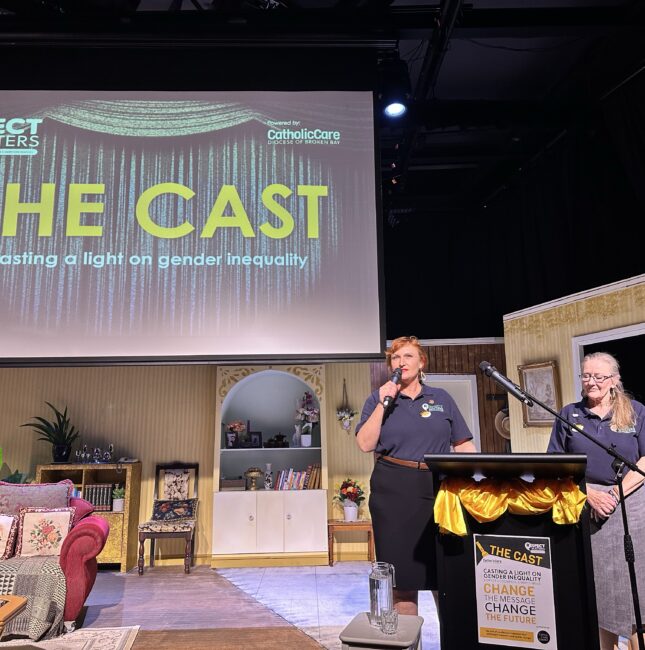
Casting a light on the drivers of domestic and family abuse
Boys don't cry. Toughen up. Be a man. CatholicCare's Respect Matters team knows there is a direct line between casual phrases like these and the domestic violence upending families across our community.
Read More
Nina reclaims her life after violence
For Nina, her workplace became more than just a job, it was a rare pocket of safety in an otherwise controlled and frightening world. It was the only place where she could speak openly with her Case Worker, free from surveillance and intimidation.
Read More